Maintaining a home’s structural integrity and daily functionality requires a comprehensive understanding of the mechanical and hydraulic systems operating out of sight beneath the ground. Modern residential properties depend on an extensive network of buried conduits, gravity-fed lateral lines, septic tanks, and foundation weeping tiles to evacuate blackwater, graywater, and severe weather runoff safely away from living areas. When these subterranean networks perform according to their original hydraulic design, household fixtures drain smoothly, basements remain dry and odor-free, and surrounding topsoils maintain stable moisture levels. From a long-term investment perspective, a well-engineered underground infrastructure preserves foundational stability, prevents costly sewer emergencies, and secures property equity when the home is appraised for resale.
However, underground drainage and waste infrastructure faces constant geological and environmental stressors that standard above-ground home components never encounter. Heavy soils shift with seasonal rain and drought, placing shear forces on buried pipe joints. Thirsty tree roots seek out the moisture and nutrients escaping through hairline cracks in underground pipes, forming thick blockages that restrict outflow. Continuous cycles of heavy rainfall can saturate local soil layers, creating high hydrostatic pressure against foundation walls while overloading older clay or cast-iron sewer lines. Because these vital conduits remain hidden under several feet of compacted earth, concrete slabs, and manicured landscaping, minor hairline fissures and settling pipes often go unnoticed until raw sewage backs up through floor drains or water seeps into finished basements. Developing a reliable, long-term strategy for sub-surface moisture and wastewater management requires moving away from emergency fixes toward proactive maintenance and regular diagnostics.
Managing Primary Tank Health and Drain Field Longevity
Rural and semi-rural properties outside the boundaries of centralized municipal sewer lines rely on self-contained, on-site wastewater disposal systems to process domestic waste safely. These decentralized setups depend on an underground septic tank where solids settle into sludge, oils float into scum, and anaerobic bacteria break down organic material before clarified liquid effluent flows into an absorption drain field. When solid sludge levels accumulate beyond design limits, or when harsh household chemicals kill off the beneficial bacterial colony, unliquefied solids wash into the leach field pipes, clogging soil pores and causing untreated effluent to bubble up onto the lawn.
Contracting certified providers for professional septic services ensures that on-site systems undergo thorough mechanical pumping, baffle inspections, and soil absorption assessments every three to five years. The proactive maintenance of on-site tanks protects the surrounding environment from biological contamination and preserves expensive absorption fields, which can cost tens of thousands of dollars to replace if saturated with solids. Technicians advise homeowners on maintaining healthy tank biology by avoiding excessive bleach, grease disposal, or non-biodegradable items that disrupt natural bacterial digestion. Consistent septic care extends the operational lifespan of the installation by decades, providing dependable, odor-free waste management across rural and suburban properties.
Maintaining Specialized Aerobic and Clarifier Systems for Rural Outbuildings
Complex rural properties, residential guest suites, detached workshops, and homes situated on tight lots with high water tables often require advanced treatment solutions beyond simple passive gravity septic tanks. These specialized sites frequently utilize active mechanical setups—such as Aerobic Treatment Units (ATUs), sequencing batch reactors, or trickling biofilters—that introduce oxygen into the waste stream to speed up bacterial digestion and clean effluent before it enters delicate local groundwater tables.
Enrolling in an ongoing program with a specialized wastewater treatment service provides property owners with the specialized mechanical, electrical, and biological monitoring required by active aeration systems. The routine monitoring of mechanical treatment systems prevents sudden mechanical breakdowns, electrical blower failures, and biofilm clogging that can trigger municipal code violations and environmental fines. Professional technicians maintain detailed logs of chemical tests, system pressure readings, and component replacements, satisfying regional environmental protection standards and public health ordinances. Comprehensive treatment care ensures that even properties with challenging soil conditions or high wastewater volumes process waste cleanly, safely, and efficiently.
Evaluating Main Lateral Conduits for Root Infiltration and Cracks
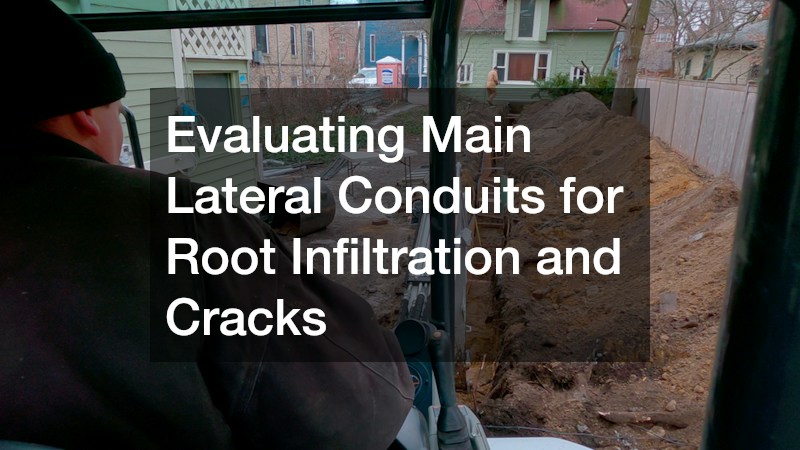
The central sewer lateral running between the home’s exterior foundation footing and the municipal main connection under the street is the primary artery for all household wastewater. Many older residential neighborhoods feature lateral lines constructed from legacy materials such as vitrified clay tile, cast iron, or bituminous fiber pipe. Over decades of ground settlement, soil freeze-thaw cycles, and tree root growth, these pipes can shift out of alignment, develop jagged cracks, or suffer from internal rust scaling that catches toilet tissue and kitchen grease.
Scheduling targeted sewer line services allows homeowners to assess the structural condition of their underground pipelines before slow drains turn into a messy backup inside the house. Early detection of lateral line weaknesses allows homeowners to pursue planned, non-invasive repairs rather than facing emergency excavations in the middle of the night. Professional technicians clear away minor intrusions, seal small joint separations, and restore proper hydraulic pitch to keep waste moving quickly toward municipal disposal lines. Consistent lateral maintenance protects properties from unexpected drain failures and preserves the value of underground plumbing systems.
Conducting High-Resolution Pipe Diagnostics to Map Hidden Flaws
Diagnosing underground pipe problems historically required tearing up manicured lawns, brick walkways, and paved driveways just to locate a suspected clog or broken joint. Digging blind based on educated guesses often resulted in excessive landscape destruction, long project delays, and high repair bills, all without confirming the exact cause of the drainage failure.
Utilizing advanced sewer camera inspections eliminates the guesswork by providing real-time, high-definition video of the pipe’s internal condition. Diagnostic technicians feed a specialized, self-leveling color camera head mounted on a stiff fiberglass push cable through the primary sewer cleanout, navigating twists, turns, and underground junctions. The video footage reveals hairline cracks, scale buildup, root penetration, joint separations, and pipe sags with complete clarity on high-contrast monitor screens. Technicians provide homeowners with digital recordings and detailed inspection reports that identify whether an issue requires simple cleaning, localized sectional patching, or a full pipe replacement. High-definition camera diagnostics save thousands of dollars in exploratory excavation costs and provide an accurate baseline for planning targeted pipeline repairs.
Scouring Grease and Mineral Scale with High-Pressure Rotary Scrubbing
Standard motorized drain snakes and mechanical augers are designed primarily to punch small relief holes through solid clogs, allowing trapped water to drain away temporarily. However, mechanical blades rarely scrape the full internal circumference of the pipe wall, leaving behind thick coatings of hardened cooking grease, scale, and fibrous root hairs that quickly catch new debris and cause another clog within a few weeks.
Applying professional hydro-jetting services clears the pipe completely by flushing underground lines with high-pressure water streams ranging from 3,000 to 4,000 pounds per square inch. This intense scouring action restores the original internal diameter of the pipe without using corrosive chemical drain cleaners that eat away at older plumbing metals. Hydro-jetting leaves pipe walls completely smooth and clean, eliminating the rough spots where grease and debris tend to collect. Thorough high-pressure line cleaning provides long-lasting drainage relief and keeps underground waste lines running freely for years.
Executing Trenchless Pipe Upgrades to Eliminate Collapsed Conduits
When camera inspections reveal severe structural failures—such as collapsed pipe crowns, missing invert sections, or severe offset joints—simple cleaning methods are no longer enough. Traditionally, replacing an underground sewer lateral required digging an open trench across front yards, tearing out mature trees, breaking through concrete driveways, and disrupting neighborhood traffic for days at a time.
Choosing modern sewer line replacement through trenchless technologies allows property owners to rebuild compromised lines with minimal disruption to the surface above. Trenchless installations produce a completely seamless, jointless interior surface that prevents future root intrusion and eliminates the joint separations common to traditional clay or cast-iron lines. The high-density materials resist chemical corrosion, ground shifting, and friction loss, maximizing wastewater velocity across low-slope lateral runs. Trenchless replacements preserve expensive landscaping and outdoor hardscapes while providing a durable, modern sewer line built to last over half a century.
Designing Site-Wide Drainage Strategies to Regulate Runoff and Saturation
Sub-surface moisture problems around a home rarely start underground; they usually begin with unmanaged rainwater running off expansive roof planes and paved surfaces. When heavy downpours overwhelm standard downspouts or pool in low lawn areas, gravity drives that moisture downward into the soil surrounding basement walls, creating hydrostatic pressure that forces water through microscopic pores in concrete foundations.
Developing comprehensive water management plans gives homeowners an engineered, property-wide strategy for collecting, moving, and dispersing storm runoff safely away from living structures. Civil drainage specialists study site topography, soil permeability, and roof catchment areas, designing balanced drainage systems that combine buried downspout conductor pipes, surface catch basins, grassy swales, and underground French drains. They slope surrounding yard surfaces at a minimum pitch of five percent away from foundation walls, ensuring that surface runoff flows naturally toward street storm basins or designated rain gardens.
Sealing Sub-Grade Walls and Footings to Halt Basement Infiltration
Concrete is naturally a porous, sponge-like material crossed by thousands of microscopic capillary tracks. When wet soil presses against sub-grade basement or crawlspace walls, water moves through the concrete via capillary action, leaving behind damp wall surfaces, white efflorescence salt deposits, and humid air that encourages mold growth. During winter months, moisture trapped inside wet foundation walls can freeze and expand, widening fine hairline cracks into active structural leaks.
Contracting professional foundation waterproofing services establishes an impermeable barrier against both capillary moisture and standing hydrostatic groundwater pressure. Waterproofing crews excavate exterior perimeter soils down to the structural footings, clean the exposed concrete, and repair structural cracks with non-shrink hydraulic compounds. They apply multi-layer elastomeric rubber membranes, install rigid dimple drainage boards that relieve hydrostatic pressure against the wall, and lay new perforated weeping tile pipes in clean, gravel-packed filter beds to direct groundwater away from the footing.
Partnering with Certified Extraction Crews During Severe Overflow Crises
Despite diligent preventative maintenance, extreme weather events, municipal sewer main surcharges, or sudden mechanical pump failures can occasionally push blackwater or storm runoff into finished basement areas. Contaminated sewer backups carry dangerous pathogens, bacteria, and toxic waste, creating an immediate biohazard that requires specialized containment, personal protective gear, and rapid extraction to protect household health.
Partnering with an accredited water damage company ensures that sudden indoor water intrusions are managed quickly in strict accordance with IICRC S500 professional restoration standards. Certified emergency crews arrive with commercial-grade truck-mounted extraction vacuums, submersible trash pumps, and antimicrobial sanitizing agents to remove standing water within hours. They safely remove waterlogged drywall, wet insulation, and contaminated carpeting, containing the affected area with plastic barriers and running industrial air scrubbers to keep airborne bacteria from spreading into upper living spaces.
Consulting Community Remediation Specialists for Rapid Structural Drying
Once standing water has been removed from a flooded basement or living area, a second, less visible threat emerges: high residual moisture trapped deep inside concrete slabs, wood sill plates, and wall cavities. If building materials remain damp for more than forty-eight hours, dormant mold spores begin to germinate, creating hidden colonies that degrade indoor air quality and trigger severe respiratory reactions for family members.
Consulting reliable local water restoration companies provides homeowners with the specialized moisture-mapping tools and high-capacity drying equipment needed to achieve thorough structural drying. Certified drying technicians use non-invasive pinless moisture meters, thermal imaging cameras, and digital hygrometers to track hidden moisture pockets behind baseboards and beneath subfloors. They set up commercial low-grain refrigerant (LGR) dehumidifiers, desiccant dryers, and high-velocity air movers in balanced layouts that pull deep moisture out of structural framing and concrete slabs through controlled evaporation.
Protecting a residential property from subterranean water damage and waste system failures requires coordinating septic maintenance, wastewater oversight, sewer line diagnostics, hydro-jetting, trenchless pipe rehabilitation, site drainage planning, foundation waterproofing, and emergency restoration into a single, cohesive property care strategy. Prioritizing underground sewer line scoping, footing drainage, and foundation sealants before investing in expensive basement finishing ensures that your interior living spaces rest on a safe, dry, and structurally sound foundation. Combining seamless trenchless pipe liners with engineered surface drainage, high-capacity sump systems, and proactive waste line maintenance creates a resilient defense network that shields the home from unexpected water backups and costly foundation repairs.